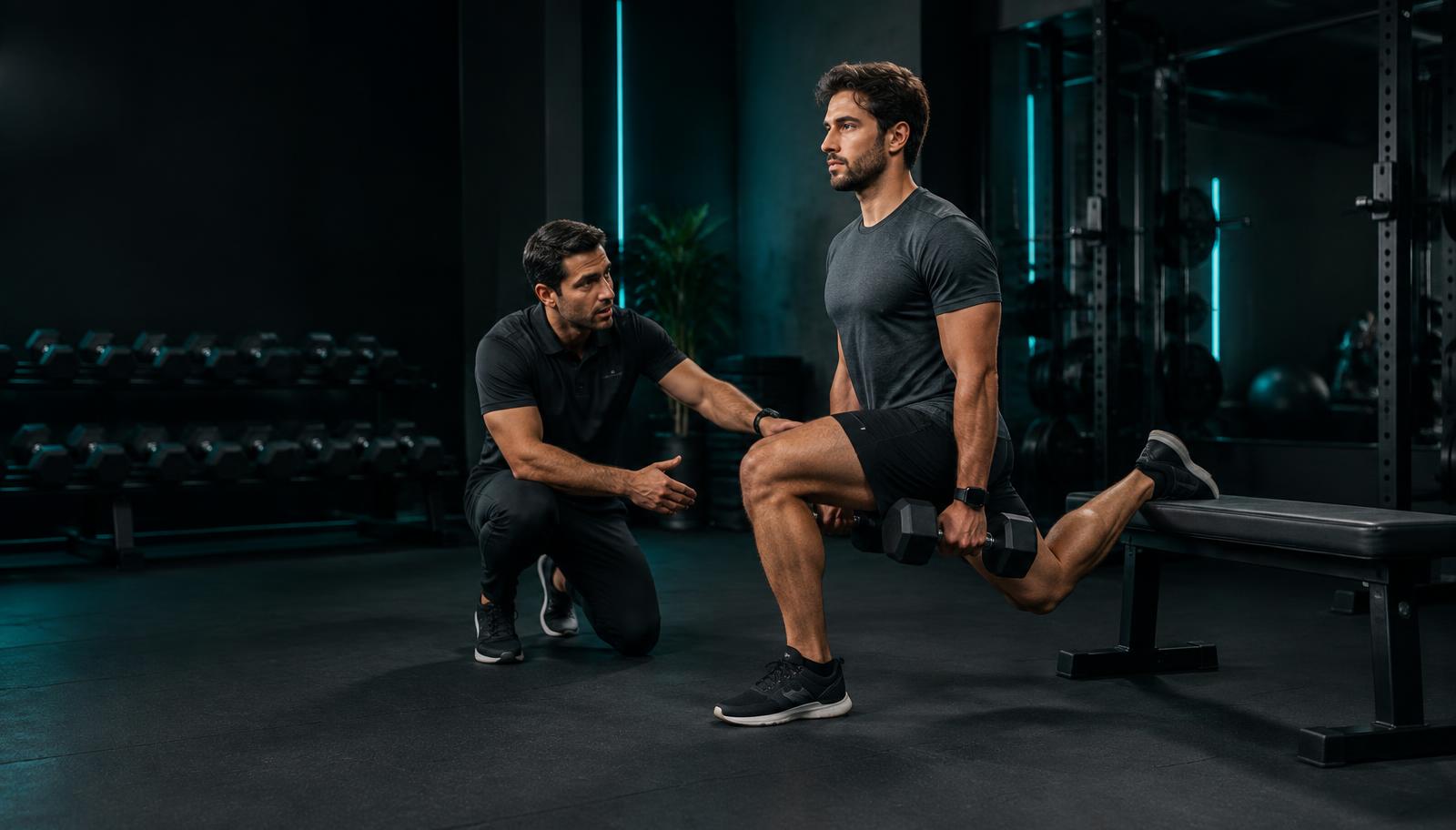
A resilient body is not one that never experiences difficulty. It is one that has developed the capacity to respond to physical demands.
That capacity is built gradually. It comes from improving strength, movement quality, and tolerance to load—then applying those qualities to the situations that matter in everyday life, work, and sport.
Avoiding every challenging movement may feel safe in the short term, but long-term confidence comes from learning that your body can handle progressively more.
Strength Changes the Conversation
Strength is more than a performance goal. It gives your body options.
When muscles can produce and absorb force effectively, everyday tasks usually require a smaller percentage of your total capacity. Carrying shopping, climbing stairs, lifting a child, or completing a long day becomes less demanding when your physical reserve is greater.
Strength can also support:
- •Joint stability
- •Bone health
- •Balance and coordination
- •Confidence under load
- •Athletic performance
- •Independence as we age
The goal is not to make everyone a competitive lifter. It is to build enough strength for the life each person wants to lead.
Movement Quality Matters
There is rarely one perfect way for every person to move. Bodies differ in structure, history, experience, and available range.
Movement quality is therefore not about forcing everyone into an identical shape. It is about developing control, useful range, and the ability to organise the body for the task at hand.
Good movement training may help you:
- •Find comfortable and effective positions
- •Improve control through a useful range
- •Coordinate different parts of the body
- •Use an appropriate technique for the intended task
- •Adapt when the environment or demand changes
Technique matters, but it should serve the person—not turn movement into something fragile or fearful.
Load Is Not the Enemy
Load is any demand placed on the body. It can be a dumbbell, a run, a long workday, a change in training volume, or the combined effect of physical and psychological stress.
The body needs load to adapt. The key is applying an amount it can currently tolerate, allowing recovery, and then progressing that demand over time.
Too little challenge may not create enough adaptation. Too much, too soon, may exceed current capacity. Effective programming lives between those extremes.
Load Management Is a Process
Good load management does not mean keeping training easy forever. It means making thoughtful decisions about variables such as:
- •Exercise selection
- •Range of movement
- •Resistance
- •Repetitions and sets
- •Training frequency
- •Movement speed
- •Rest and recovery
Progress is not always linear. Some weeks you can do more. During periods of poor sleep, illness, travel, or high stress, maintaining or temporarily reducing the workload may be the better decision.
Adjusting is not failing. It is part of a sustainable plan.
From Exercise Capacity to Life Capacity
Gym numbers matter only when they support something meaningful.
A stronger squat may make getting up from the floor easier. Better single-leg control may support confident walking and running. Improved pulling strength may help with work, sport, or carrying. Greater cardiovascular capacity may allow you to hike, travel, or play without becoming exhausted.
This is the difference between completing exercises and developing capability.
The programme should gradually connect what happens in training with what you need outside it.
Challenge and Recovery Work Together
Training provides the signal for adaptation. Recovery gives the body the opportunity to respond.
Harder is not automatically better. The most effective session is the one that creates a useful challenge without repeatedly overwhelming your ability to recover.
That balance is influenced by sleep, nutrition, stress, training history, and everything else happening in your week. Monitoring how you respond allows the programme to progress while remaining realistic.
Resilience Is Built, Not Assumed
A resilient body is created through consistent exposure to appropriate demands.
First you learn the movement. Then you strengthen it. Then you increase the challenge. Eventually, you apply that capacity to more complex, faster, heavier, or less predictable tasks.
There are no shortcuts, but there is a clear direction: move well, build strength, manage load, recover, and repeat.
That is how confidence becomes physical capacity—and how capacity becomes resilience.